
Bangladeshi Traditional Food: A Journey Through the Flavors of Bangladesh
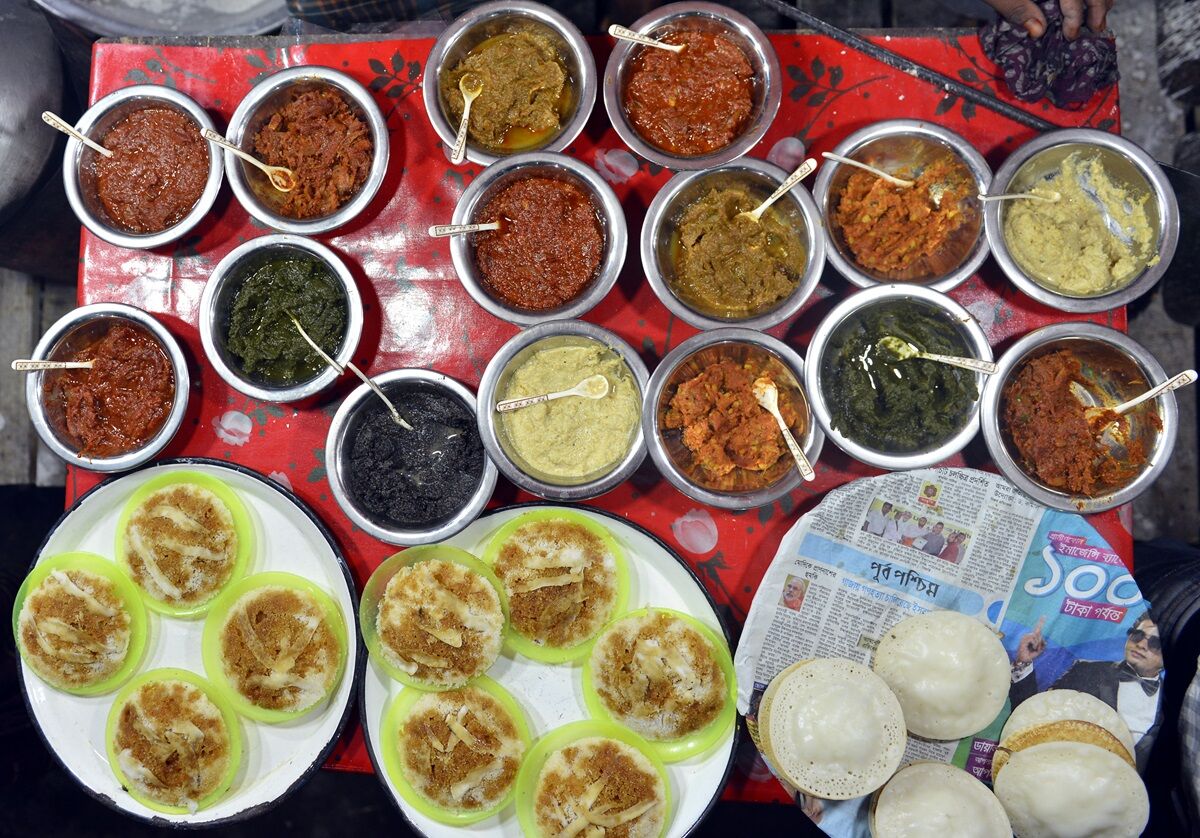
If you want to understand Bangladesh, start with its food.
You could walk through the crowded streets of Dhaka, sit beside a quiet river in Barishal, visit a tea garden in Sylhet, or spend an evening in a village in Rajshahi. Everywhere you go, food tells a slightly different story.
Bangladeshi cuisine is often described simply as rice, fish and curry. That description is not wrong, but it misses the most interesting part. The food changes with the rivers, soil, seasons, religion, history and even the personality of each region. A dish that tastes familiar in Dhaka may have a completely different character in Chattogram or Sylhet.
For a foreign traveler, this is one of the pleasures of eating in Bangladesh. You are not simply ordering a meal. Very often, you are tasting a particular place.
Rice and Fish: The Heart of a Bengali Meal
Rice is at the center of everyday Bangladeshi life. For millions of people, a proper meal is difficult to imagine without a steaming plate of rice.
Then comes the fish.
With hundreds of rivers, wetlands, floodplains and ponds, Bangladesh has developed an extraordinary relationship with freshwater fish. Hilsa, locally called ilish, is perhaps the most famous. Its rich, oily flesh and distinctive flavor have made it almost a cultural symbol of Bengal.
During the monsoon, when the rivers swell and fresh hilsa becomes available, families eagerly look forward to dishes such as ilish bhapa, where the fish is steamed with mustard, green chili and spices. The result is rich, fragrant and slightly fiery, with the unmistakable taste of mustard running through the soft fish.
For someone trying Bangladeshi food for the first time, hilsa can be a revelation. It is not a delicate European-style fish. It has a stronger personality, plenty of tiny bones and an intensely rich flavor. Experienced Bangladeshi diners will often remove the bones almost instinctively while enjoying every bite.
Dhaka: Where Old Bengal Meets the Modern City
Dhaka is probably the best place to begin exploring Bangladeshi food because the capital has absorbed culinary traditions from almost every corner of the country.
But Old Dhaka has a character of its own.
Walk through the narrow streets of the old city and you will encounter a food culture shaped partly by centuries of Mughal influence. The cooking is generally richer, heavier and more aromatic than everyday village food.
One of the stars is kacchi biryani.
Tender pieces of mutton are layered with fragrant basmati-style rice, potatoes and aromatic spices before being slowly cooked together. When the lid is finally lifted, the smell arrives before the food does. Saffron-like aromas, fried onions, meat and spices fill the air.
There is an important cultural detail here. Kacchi biryani is not simply something people eat because they are hungry. In Dhaka, it is closely associated with celebrations, weddings, family gatherings and special occasions.
Old Dhaka is also famous for dishes such as bakarkhani, a crisp, layered flatbread, and a variety of rich meat preparations.
Then there are the sweets.
Dhakaiya food culture has a serious sweet tooth, and desserts such as shahi jilapi can be spectacularly rich. Unlike the familiar thin jalebi found in many parts of South Asia, shahi jilapi can be much thicker, larger and more dramatic.
This is the kind of food best enjoyed slowly, preferably after you have already accepted that your planned diet for the day is probably over.
Chattogram: Food with a Stronger Personality
Travel southeast to Chattogram and the food begins to change.
The region's coastal location, history as an important port and strong local culinary traditions have produced a cuisine with its own identity.
One dish visitors should look for is mezban beef.
Mezban is more than a dish. It is a traditional communal feast of Chattogram, historically associated with hospitality and important social occasions. Large quantities of beef are cooked with spices and served to guests, often alongside rice.
The flavor is bold, deeply spiced and unmistakably meaty.
For a traveler, the interesting thing about mezban is not only the taste. It is the experience of eating food that exists because people want to feed other people. Hospitality is part of the recipe.
Chattogram's coastal connection also means seafood plays an important role in local eating. Fresh fish, prawns and other seafood appear in many forms, often with stronger seasoning than a visitor might expect.
Sylhet: Mustard, Sourness and the Fragrance of Tea
Sylhet feels different from much of Bangladesh.
Green hills, waterfalls, rivers, tea gardens and wetlands shape the landscape, while the region's food has its own distinctive character.
One of the most famous ingredients associated with Sylheti cooking is shatkora, a fragrant citrus fruit with a pleasantly bitter and sour character.
It is often cooked with meat, particularly beef or mutton. The combination can surprise first-time visitors. The meat is rich and savory, while shatkora adds a sharp citrus bitterness that cuts through the heaviness.
It is exactly the kind of flavor combination that makes regional Bangladeshi food interesting. Instead of trying to make everything mild and universally familiar, local cooking often embraces strong flavors.
And then there is tea.
Sylhet is the center of Bangladesh's tea-growing country, where plantations stretch across rolling green landscapes. Tea is part of the region's identity, economy and daily life.
A visit to Sylhet without experiencing its tea culture would feel incomplete.
Barishal and the River Country
In southern Bangladesh, rivers dominate both the landscape and the kitchen.
Barishal is famous for its waterways, floating markets and abundance of agricultural produce. Here, river fish and seasonal vegetables are central to traditional meals.
The food of southern Bangladesh reflects the environment around it. Fresh fish may be cooked simply with spices, while vegetables are prepared in ways that allow their natural flavors to remain noticeable.
This is an important part of Bangladeshi cooking that visitors sometimes miss. Not every traditional dish is rich or heavily spiced.
A simple plate of rice, lentils, vegetables and freshly cooked fish can be one of the most satisfying meals in the country.
Rajshahi: Mangoes, Sweets and the Flavors of the Northwest
The northwest tells another story.
Rajshahi is particularly famous for mangoes. When summer arrives, markets fill with varieties such as Fazli, Langra and Gopalbhog.
Eating a perfectly ripe Bangladeshi mango is a seasonal experience. The fruit can be intensely fragrant, juicy and sweet, and locals take considerable pride in knowing which variety is best at which stage of ripeness.
Mangoes are eaten fresh, but they also become part of pickles, chutneys, desserts and drinks.
Rajshahi and neighboring areas are also known for sweets and dairy-based foods. This is where the relationship between agriculture and cuisine becomes especially visible. What grows in a region, what animals are raised there and what local markets produce all influence what eventually appears on the dining table.
Rural Bangladesh: Where Food Becomes Personal
Perhaps the most memorable Bangladeshi food is not found in a famous restaurant at all.
It may be lunch in a village home.
A typical traditional meal can arrive as several small dishes rather than one large curry: rice, dal, fried vegetables, mashed vegetables, fish, leafy greens and perhaps a sour preparation or chutney.
There is a rhythm to eating such a meal. You mix a little rice with dal, add a piece of fish, try some vegetables, perhaps add a little chili, and continue.
The food is simple, but it is rarely boring.
One reason is the enormous variety of ingredients available through Bangladesh's seasons. Pumpkin, eggplant, banana flower, jackfruit, green papaya, taro, gourds, leafy greens and countless other vegetables appear at different times of the year.
The same ingredient can be cooked in several completely different ways.
Pitha: Bangladesh's Seasonal Cakes
If there is one part of Bangladeshi food culture that deserves more attention from foreign visitors, it is pitha.
Pitha is a broad family of traditional rice-based cakes and sweets. Some are steamed, some are fried, some are filled with coconut or date-palm jaggery, and others are cooked over a griddle.
They are particularly associated with winter.
One of the most famous is bhapa pitha. Rice flour is steamed with coconut and date-palm jaggery, producing a warm, soft cake with a wonderful smoky sweetness.
Then there is chitai pitha, patishapta, puli pitha and many regional varieties.
Pitha is not simply dessert. It is closely connected with village life, winter harvests, family gatherings and hospitality.
For a foreign traveler, discovering pitha can be one of those small experiences that makes a trip memorable because it is difficult to separate the food from the season and the people preparing it.
Street Food: Bangladesh in a Hurry
Bangladesh also has a lively street-food culture.
In busy markets and city neighborhoods, you will find fuchka, chotpoti, jhalmuri, singara, beguni and many other snacks.
Fuchka is perhaps the most recognizable. Crisp hollow shells are filled with spiced potato, chickpeas, tamarind water and chili. The combination is sour, spicy, crunchy and refreshing all at once.
It is messy.
It is addictive.
And watching a skilled street vendor prepare fuchka at remarkable speed is part of the experience.
Jhalmuri is another favorite. Puffed rice is mixed with mustard oil, onion, chili, peanuts, spices and other ingredients to create a snack that is crunchy, spicy and intensely aromatic.
These foods show another side of Bangladesh. Traditional cuisine is not confined to family kitchens and formal restaurants. It lives on the streets.
The Taste of Bangladesh
What makes Bangladeshi food special is not one particular ingredient.
It is the combination of rice and river fish, mustard oil and green chili, seasonal vegetables and lentils, freshwater fish and fragrant spices, sweet jaggery and sour fruits.
It is also the regional variety.
In Dhaka, you may find the richness of Mughal-influenced cooking. In Chattogram, bold mezban flavors. In Sylhet, the distinctive bitterness of shatkora. In Rajshahi, the sweetness of mangoes. In Barishal, the flavors of river country. And in villages throughout the country, food that changes with the season and whatever has just been harvested or caught.
So when you visit Bangladesh, don't only ask, "What is the national food?"
Ask a more interesting question:
"What do people eat here?"
That question can take you from a busy Dhaka restaurant to a riverside village, from a tea garden in Sylhet to a winter pitha gathering, and from a plate of fragrant kacchi biryani to a simple meal of rice, dal and fresh fish.
And somewhere along the way, you may discover that Bangladeshi food is not just something to taste.
It is one of the best ways to meet Bangladesh.
Footprint Tours BD
Travel enthusiast at Footprint Tours BD. Passionate about showcasing the beauty and culture of Bangladesh.
View all postsEnjoyed this article?
Get more travel guides delivered to your inbox.